
Independent Photographer · Writer · Public-Records Researcher · Transparency Advocate
The Camera, the Public Record, and the Right to Know
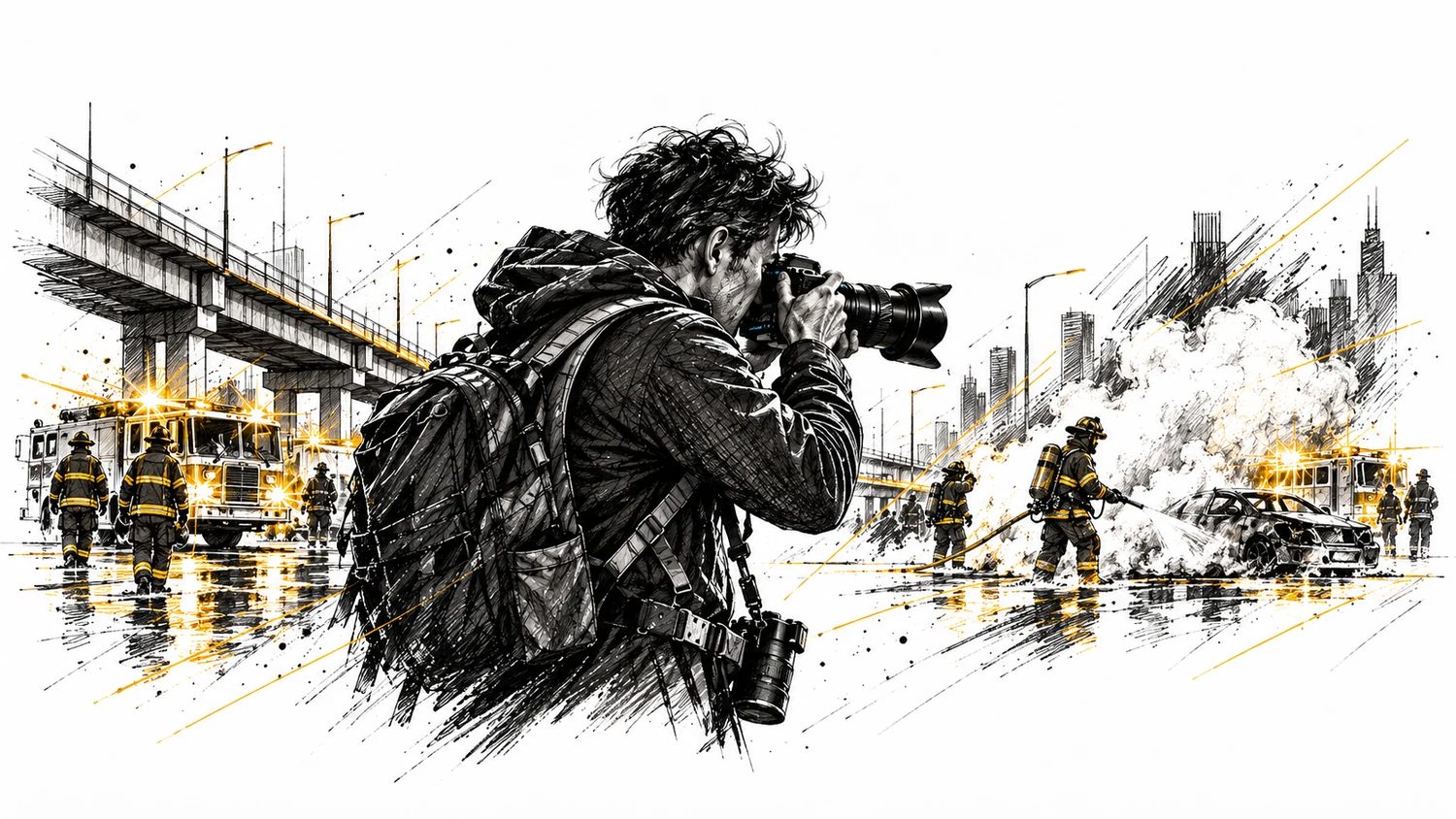
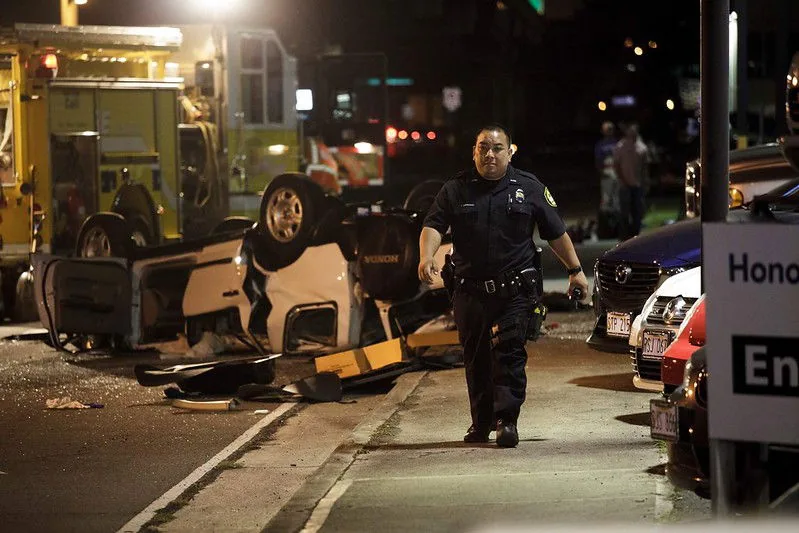
I made a name for myself chasing police cars, fire engines, and ambulances through the streets of Honolulu—not because the established news organizations had invited me into their profession, but because I saw an opportunity to do something they weren't doing.
I wanted to bring the kind of first-responder stringer photography long familiar to Los Angeles into the Hawaiʻi news market.
Not the carefully selected publicity photograph handed to a reporter by the Honolulu Police Department or Honolulu Fire Department the following morning. Not the obligatory image of a police chief standing behind a podium, telling the public what his department had decided the public ought to know.
I wanted the photograph taken at the scene. The one that documented what was happening before the press release arrived.
And I wanted other people to be able to use it.
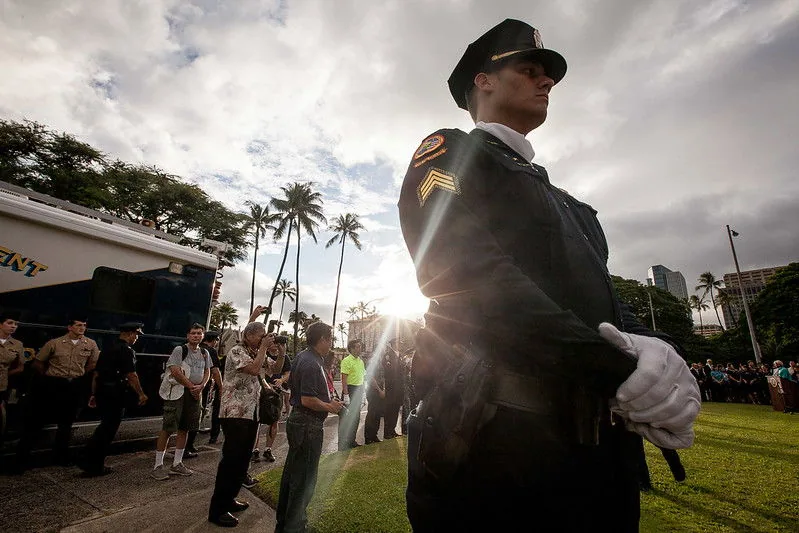
Through Disaster Images℠, I developed a portfolio of emergency-response photography covering police, firefighters, emergency medical services, and the institutions charged with protecting the public.
Much of that photography was made available under Creative Commons licensing, reflecting my belief that independent reporting shouldn't be reserved for television stations, newspapers, or corporations with the largest budgets and closest relationships with government public-information officers.
I saw an opportunity to introduce Los Angeles-style spot-news photography into Honolulu, bringing independent coverage to a market where such images were often difficult to obtain outside established newsrooms and government publicity channels.
The objective was straightforward: make original, timely photographs available to the people reporting the news.
A photograph has value beyond the moment it is taken. It can substantiate a news account, illustrate a controversy, preserve the appearance of a place before circumstances change, or become part of a public record that somebody will consult years later.
That is why I have never regarded photography as merely a matter of taking pretty pictures.
The photograph is evidence. The story is what we do with it.
And the institutions that control access to information understand that relationship very well.

Public Safety, Police Scanners and the Encryption of Government
Consider what happens when a city encrypts its public-safety radio communications.
For generations, police scanners gave journalists and ordinary citizens an imperfect but extraordinarily useful means of understanding what was happening around them. Dispatch traffic could alert a photographer to a working fire, a major collision, or a rapidly developing police incident long before an official statement reached the newsroom.
A scanner didn't make someone a journalist. But it gave an aspiring journalist something indispensable: the opportunity to get there.
From the field
Honolulu, through the camera
Now consider the consequences when that opportunity disappears.
The Honolulu Police Department, Honolulu Fire Department, and other public-safety agencies operate within a technological and political environment in which digital radio systems, interoperability programs, encryption standards, and government procurement decisions can dramatically change what the public is permitted to hear.
Technologies such as Project 25 (P25) digital radio and AES-256 encryption have become part of the national debate over the appropriate balance between public-safety operational security and government transparency.
Officials cite officer safety, privacy, security, and the protection of sensitive information. Some of those concerns are legitimate. But so is the public's interest in independent observation.
The question is not simply whether a police officer should be able to communicate privately when an operation requires it.
The question is whether entire categories of ordinary public-safety activity should become inaccessible to the people who pay for those systems.
And who, exactly, gets to decide which journalists deserve access?
The established television station? The newspaper whose reporters attend the police chief's press conferences? The broadcaster with an expensive satellite truck and a relationship with the public-information officer?
What about the freelance photographer working independently, with a camera, a scanner, and the determination to document what happened?
In Southern Nevada, I watched the Las Vegas Metropolitan Police Department's transition toward encrypted dispatch communications change the practical environment for independent news gathering. LVMPD's area commands, its P25 radio infrastructure, and the public's ability to monitor routine dispatch traffic became subjects of particular interest to me.
I believed the loss of ordinary scanner access would diminish opportunities for independent coverage and leave journalists increasingly dependent upon official announcements.
That concern has never been confined to Las Vegas. The same questions confront Honolulu, Los Angeles, San Diego, and other American metropolitan areas as governments modernize their communications systems.
A newsroom may have a press badge, a verified social-media account, and an established relationship with city government. But none of those things, by themselves, establishes its independence.
Journalism isn't a privilege conferred by the people being covered.
It is an activity. A practice. A responsibility that must remain open to people outside the established institutions of media.

Public Records, Real Estate and the Economics Beneath the Landscape
My interests have never stopped at the scene of an emergency.
Before and alongside my photographic work, I spent years researching real-property records in Honolulu.
At Blue Sky Enterprises, I worked with records maintained by agencies including the City and County of Honolulu Department of Planning and Permitting.
Property descriptions, Tax Map Keys (TMKs), assessment information, ownership records, recorded instruments, building permits, and the documentary history of land became part of my working vocabulary.
I subsequently held a Nevada real-estate Broker-Salesman license and developed an interest in property ownership and the economic opportunities that arise when you know multibillionaires’ secrets. I began to wonder whether the mathematics of corporate finance, real-estate financing, and investing—the kind taught at major universities—were among those secrets.
Because one of the cold, hard lessons you learn in real estate is that no one will ever do your math for you.
There's something revealing in the National Association of REALTORS® Code of Ethics. Agents who prepare opinions of property value must possess the necessary competence or disclose their limitations. When they bring in another qualified professional to assist with work beyond their expertise, they must identify that person and explain the contribution.
Why is that so important?
Hidden in that rule is a reality that applies to the 1 percent as much as it does to the girl in the gray blazer on the real-estate sign planted in somebody's front yard: If you depend on somebody else to do your math, some bottom feeder will fudge every number he can to steal from you.
Donald Trump had to know how to do his own math. Without a doubt. We wouldn't know who he was, and his name wouldn't be on all those buildings, if he couldn't quantify a deal. Even if Dad, with all his money, had tried to make it impossible for his son Donald to lose, he would have lost BIG TIME if he couldn't calculate value, leverage, debt, and risk.
Real estate taught me to think in terms of ownership, title, value, debt, and the financial arrangements beneath the visible landscape.
Journalism taught me to ask who had written the account.
Photography taught me to look before accepting the explanation.
These fields are more closely related than they first appear. A house, courthouse, police station, university campus, or street corner occupies physical space, but also belongs to a much larger system of law, money, history, government, and human relationships.
I am interested in those relationships. And I am interested in the people whose opportunities are shaped by them.
Honolulu, the University of Hawaiʻi, and an Extraordinary Period in American Journalism
At the University of Hawaiʻi at Mānoa, I developed interests in writing, journalism, university life, and the people whose intellectual and professional achievements give institutions their importance.
The campus was home to Ka Leo O Hawaiʻi, the student newspaper, and the Shidler College of Business, whose namesake, Jay H. Shidler, became an especially visible figure in the university's philanthropic history.
It was an environment in which journalism, public policy, scholarship, wealth, philanthropy, and professional ambition could intersect.
Those years belonged to a remarkable period in American journalism.
Barack Obama occupied the White House.
Edward Snowden's 2013 disclosures were transforming international debates over government surveillance, classified information, whistleblowing, and the obligations of the press. Snowden's connections to Oʻahu, including Royal Kunia in the Waipahu area, made a major national story unexpectedly local.
Katie Couric had already broken a historic barrier when, on September 5, 2006, she became the first woman to serve as solo anchor of a major American network's weekday evening newscast, the CBS Evening News.
Walter Cronkite's recorded introduction lent the authority of an earlier broadcasting generation to an institution entering a new era.
But there was something else. Something magnificent.
James Horner.
The composer who had given Titanic its extraordinary musical soul was summoned to give the evening news a new one.
And what a magnificent orchestral statement he delivered. To my ear, it was among the most epic, sweeping interpretations of the CBS Evening News musical identity ever conceived.
Horner brought Hollywood's great cinematic vocabulary into the American living room: surging strings, commanding brass, the distant suggestion of something immense and consequential approaching over the horizon. Music that could make the opening of a half-hour television newscast feel like the opening of history itself.
It wasn't the score from Titanic. It was a new composition. But the sensibility was unmistakable.
There was something of that same haunting grandeur, that almost Celtic melancholy, the feeling of a distant bagpipe lament carried across an ocean. Not necessarily the same instruments or melodies, but the same composer making the ordinary seem momentous, making an institution sound as though the fate of civilization depended upon what happened next.
And for an entire generation, Horner's name already meant something.
1997._ Titanic_.
Leonardo DiCaprio. Kate Winslet. James Cameron.
A generation had watched what may have been the last great blockbuster of the old, nearly universal moviegoing culture: one of those colossal theatrical experiences that seemed to belong to everybody at once, before entertainment fractured into a thousand competing screens and private universes.
The critics could pick at the sentimentality. The cynics could sneer at its popularity. They could complain about the dialogue, the romance, the excess.
But they could not explain away the achievement.
Eleven Academy Awards. A motion picture that became a worldwide cultural event. And beneath its astonishing spectacle, a musical composition of almost unbearable tenderness.
Listen to Rose. Those spare piano phrases, so delicate that they seem scarcely able to bear the weight of the orchestra gathering behind them.
Listen to Hymn to the Sea. The mournful, Celtic-inflected cry of the pipes, summoning not merely the memory of a shipwreck but something far older: the grief of humanity, the passage of generations, the terrible beauty of lives that existed for an instant and then disappeared.
And consider what Cameron was doing with the picture itself.
Russell Carpenter's Academy Award-winning cinematography. The extraordinary lighting. The golden, almost tungsten warmth of that great ship illuminated against the black Atlantic, a floating palace of Edwardian wealth proceeding into darkness.
And there, against that vast machinery of money, class, privilege, and inherited importance, stands a penniless artist.
Jack Dawson.
A nobody, according to the social arrangements of his time.
And Rose DeWitt Bukater, the aristocratic young woman played by Kate Winslet, dressed in that magnificent red-and-black evening gown designed by Deborah L. Scott. A woman surrounded by wealth and expensive things, whose life nevertheless seems to belong to everybody but herself.
There she is, preparing to throw herself into the Atlantic.
And who saves her?
Not a millionaire. Not her wealthy fiancé. Not one of the distinguished gentlemen occupying the grand dining rooms of the world's most luxurious ocean liner.
A broke artist.
A vagabond. A fellow who travels without money or social standing, who would scarcely be admitted into the rooms where the decisions governing Rose's life are made.
Why should he save her?
What obligation does he have to this young aristocrat, whose entire social universe has been organized around keeping people like him at a distance?
He sees something in her that all that money has failed to recognize.
He sees the value of her life.
Not the value of her family name. Not the value of her engagement, her inheritance, her jewels, or the expensive dress she is wearing.
Her life.
A human being.
And suddenly the poor artist possesses something that the entire aristocracy aboard that ship appears incapable of providing: the ability to recognize another person's worth without first calculating her social position.
EQUALITY!
There is Cameron's great democratic gesture.
The man without property recognizes a human value that the people with property have somehow managed to overlook.
And the extraordinary irony is that Rose, who supposedly possesses everything, must depend upon Jack, who possesses almost nothing, to discover the possibility of living freely.
Love enters the story not merely as romance but as a rebellion against an entire economic arrangement.
The great ship has its classes, its dining rooms, its accommodations, its carefully regulated passages between one world and another. Even its architecture enforces the distinctions society has already made.
But love refuses to obey the floor plan.
And isn't that the extraordinary allegory Cameron gives us?
A young man crosses a class boundary and saves a young woman from a society that has mistaken her economic value for her human worth.
And the whole magnificent structure is already headed toward catastrophe.
Not because their love causes the ship to sink. The iceberg does that.
But because Cameron has placed their little declaration of human equality inside a civilization whose grandeur cannot protect it from its own disastrous confidence.
The ship is an economy, too. An entire social order, floating on the ocean, with its millionaires above and its working poor below, all traveling toward the same terrible destination.
For a few extraordinary hours, the artist and the aristocrat discover something more valuable than the entire ship.
Each other.
And James Horner makes us hear it.
The piano. The strings. The lonely, almost ancient cry of those Irish pipes.
Nearly a decade later, that same composer's name appeared behind the music introducing Katie Couric's historic arrival at the CBS Evening News. From James Cameron's great cinematic allegory of class and human worth to a woman taking her place in one of American journalism's most prestigious chairs, Horner's music accompanied two very different moments in the continuing argument over who deserves to stand at the center of the story.
In Washington, D.C., the Newseum opened its monumental Pennsylvania Avenue home on April 11, 2008, celebrating the history of journalism and the freedoms protected by the First Amendment.
The great institutions of American journalism were commemorating their histories, asserting their authority, and presenting themselves as custodians of a democratic ideal.
Yet the questions beneath all that institutional grandeur were not so different from the questions Cameron had posed aboard his magnificent doomed ocean liner.
Whose life matters? Whose voice is heard? Who is permitted to cross the boundaries that society has drawn?
And what happens when somebody from the wrong side of those boundaries insists upon being recognized as an equal?
Social media, meanwhile, was changing how newspapers, television networks, and independent reporters reached their audiences. The distinction between the credentialed journalist and the person with a camera and an internet connection was becoming harder to defend.
I found that development exhilarating. I also found the resistance to it revealing.
Because when the equipment becomes affordable, when photographs can be published without a printing press, and when a writer can address readers without obtaining an editor's permission, the remaining barriers become easier to recognize.
Money. Relationships. Institutional recognition. Access.
And sometimes the determination of people already inside an institution to keep outsiders outside.

Nye County, Las Vegas, and the Independence of the Individual
My experiences in Nevada eventually gave these questions an intensely personal dimension.
I spent approximately three years in custody at the Nye County Detention Center, 1521 E. Siri Lane, Pahrump, Nevada, an experience that figures prominently in my memoir and continuing writing about law, government authority, and individual freedom.
Pahrump sits in Nye County, west of Las Vegas, in a landscape whose physical distance from the metropolitan center can obscure how closely the two places are connected.
The Nye County Sheriff's Office, the Las Vegas Metropolitan Police Department, and the public officials responsible for law-enforcement policy became part of the institutional environment through which I experienced and examined these questions.
I observed the growing role of public image, television entertainment, media relations, and the branding of law-enforcement agencies. Police officers had become familiar personalities in reality television. Sheriff Joseph Lombardo, who led LVMPD before becoming governor of Nevada, represented another intersection of policing, politics, and institutional authority.
I do not regard my detention experience as something to be concealed in order to present a conventional professional biography. It belongs to my story.
It also changed my understanding of the distance between the authority exercised by public institutions and the resources available to an individual attempting to challenge them.
An institution may have attorneys, investigators, communications personnel, public funding, and decades of accumulated legal and political experience.
The individual confronting it may have a notebook, a collection of documents, a camera, and whatever money remains in his bank account.
That is not an equal contest.
And the difference matters.
Because when the government has the resources to arrest you, prosecute you, and hold you in custody, while you cannot even afford the bail necessary to regain your freedom, the imbalance is no longer an abstraction.
It becomes the difference between fighting your case from the outside and fighting it from inside a jail cell.
Money buys access to lawyers. Money buys time to investigate. Money buys the ability to preserve evidence, commission research, travel, publish, and pursue legal remedies through proceedings that can outlast the resources of an ordinary individual.
And money buys something even more fundamental: the practical freedom to act.
I learned that lesson in Nye County.
But I have no intention of allowing it to be the final lesson.
That is one reason I am building Take Title℠—a real-estate acquisition and investment initiative intended to turn donated or otherwise acquired property into income-producing assets capable of supporting independent work and long-term financial freedom.
I welcome inquiries from property owners interested in contributing real estate, including properties carrying mortgages, liens, maintenance obligations, or other complications that may warrant individual evaluation.
The objective is not simply to receive donations and spend the proceeds.
It is to build a durable economic foundation.
A property can generate rent. Rent can support operations. The net income remaining after expenses, obligations, and reserves can help finance the work that otherwise becomes impossible when an individual confronts institutions with vastly greater resources.
Photography. Public-records research. Independent reporting. Books. Legal consultation. The pursuit of accountability.
And, when necessary and financially feasible, the ability to retain qualified counsel rather than surrender a legitimate legal objective simply because the other side can afford to keep litigating.
This is the economic proposition behind Take Title℠.
I have spent years studying the machinery of real estate: ownership, title, mortgages, liens, encumbrances, cash flow, and the opportunities that sometimes exist where property owners and conventional investors see only complications.
I intend to put that knowledge to work.
If government institutions can draw upon immense financial resources to exercise their authority, then an independent citizen must find lawful ways to build resources of his own.
Take Title℠ is part of my answer.
Property contributions and proposed transactions are subject to due diligence, legal review, and mutually agreed terms. No particular property, debt assumption, tax treatment, or financial return is guaranteed.
I am not asking the public merely to admire the difficulty of the contest.
I am inviting people with the means to help change its economics.
The memoir · A warning to parents · A fight for a second chance
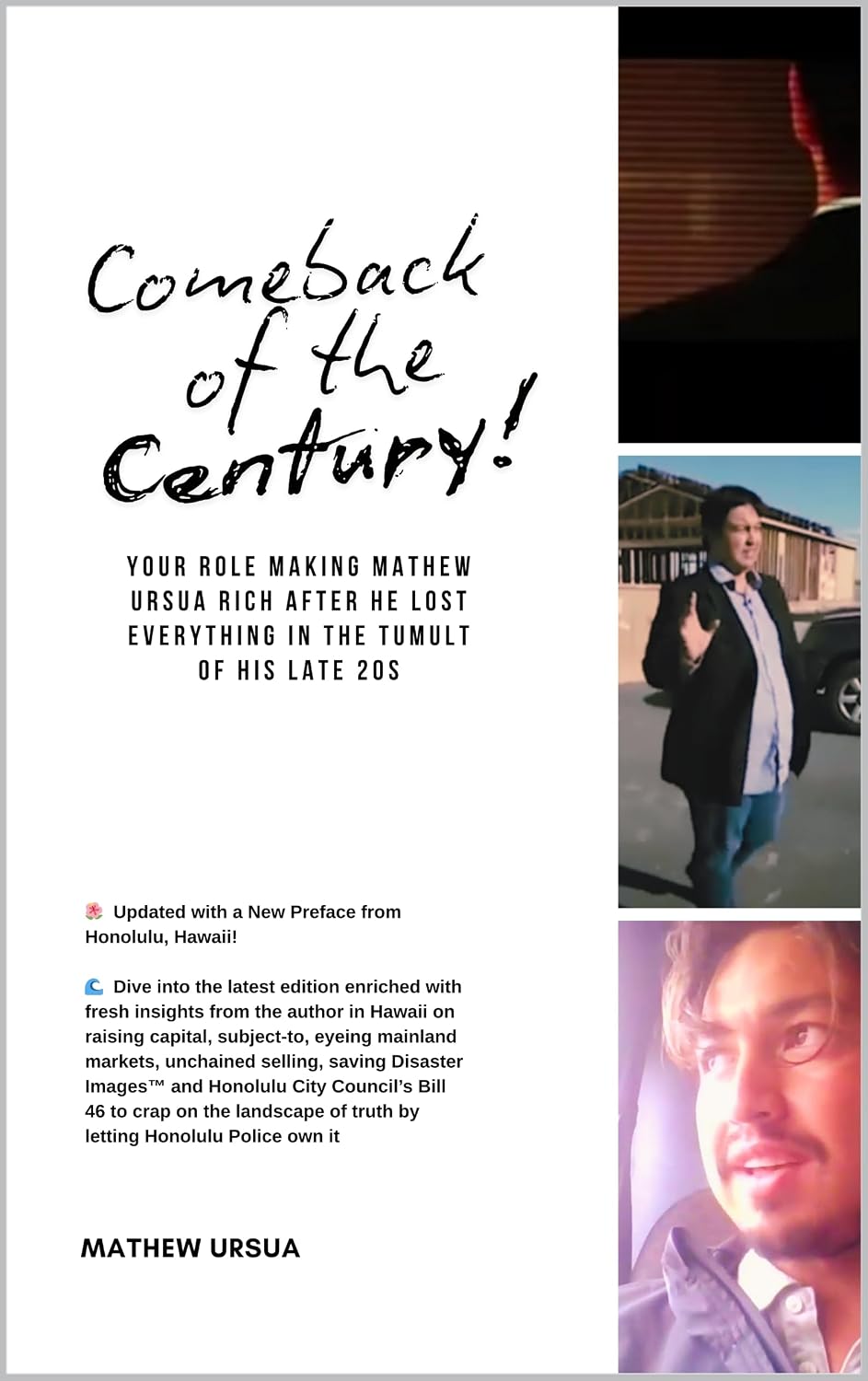
Comeback of the Century
What if the people entrusted with helping your child were also deciding which future your child would never get to have?
Before you sign another IEP. Before you accept another diagnosis. Before you agree to another prescription. Read this book.
Mathew Ursua was a boy with ambitions larger than the world around him. He wanted wealth, independence, travel, romance, education, achievement—and the freedom to become somebody extraordinary.
Then came the labels. The professionals. The medications. The adults who believed they knew what was best.
And the years he believes he can never get back.
In Comeback of the Century, Ursua delivers an unflinching examination of the institutions that can acquire extraordinary power over developing children. From public-school special education and psychiatric treatment to poverty, incarceration, homelessness, and the brutal economics of starting over, he asks a question that should disturb every parent:
Who gets to decide what your child is capable of becoming?
Ursua calls attention to what he provocatively characterizes as the “IEP death panels”—the meetings, evaluations, and institutional decisions that, in his view, can constrain a child's possibilities while presenting themselves as acts of professional care.
Part memoir. Part institutional reckoning. Part declaration of independence.
Comeback of the Century follows one man's attempt to reclaim his body, his ambitions, his economic future, and the years of possibility he believes were taken from him.
For parents who refuse to surrender their children's futures. For readers who question authority. For anyone who has ever been told to expect less from life.
This is a story about the price of lost opportunity—and the determination to make the rest of a life count.
THE COMEBACK IS NOT OVER.
Psychiatry vs. the Life That Might Have Been
There is another institution whose authority I have come to question, and I question it with a particular fury.
American psychiatry.
I was a boy going through puberty when psychiatric treatment became part of my life. I was given an autism diagnosis that I have since come to dispute. I was prescribed Concerta, a methylphenidate stimulant, and later Abilify, an antipsychotic medication.
I was a freshman in high school.
Think about that.
Not a man who had lived thirty years, fallen apart, and sought treatment after deciding for himself that the life he was living had become intolerable.
A boy.
A boy at precisely the age when his body, ambitions, appetites, friendships, romantic interests, and sense of his own possibilities were undergoing extraordinary change.
And adults with professional credentials were intervening in his developing nervous system.
What did those interventions cost me?
That is one of the questions at the heart of Comeback of the Century.
I believe the medications changed the way I moved through the world. I remember a loss of energy, physical confidence, urgency, and the kind of fierce emotional response that might otherwise have pushed me to escape circumstances I found intolerable.
My anger was not always something I needed to be cured of.
Sometimes it was information.
Sometimes it was the entirely appropriate response of a young person watching other people inherit opportunities that seemed permanently closed to him.
And sometimes anger is the beginning of action.
What happens when you medicate a boy's impulse to fight for a better life before he has had the chance to discover what that life might be?
The question is not merely whether a prescription reduced some troublesome behavior that an adult wished to eliminate.
The question is what else it reduced.
I was growing up in Hawaiʻi, fascinated by a world that extended far beyond my immediate surroundings.
I admired ambitious, athletic, internationally minded young women—the sort of multilingual, cosmopolitan girls who might play soccer, travel to Germany, speak another language at home, and regard boarding an international flight as an ordinary part of family life.
Lufthansa. California. Europe. International schools. A family with property and resources accumulated over generations.
That was an entire social universe I wanted to enter.
And why shouldn't I?
Why should the young man growing up without those advantages be expected to limit his ambitions to the people and opportunities immediately around him?
Why couldn't I have written to families in Los Angeles or San Diego, introduced myself, asked to meet people, sought friendships, pursued romances with girls who knew Paris Hilton and the Hamptons, too, and tried to build a life among people who had real access?
I had real-estate ambitions even before I understood the financial machinery through which people accumulated real estate.
Imagine a teenage boy from Hawaiʻi writing to a Southern California family whose wealth included apartment buildings, property holdings, and businesses built over several generations.
He wants to travel. He wants to learn. He wants to meet their children, make friends, find a girlfriend, and understand how families build that kind of life.
There is nothing pathological about those ambitions.
They are social ambition. Romantic ambition. Economic ambition. The ordinary desire to escape the limitations of one's circumstances.
This was the America of Barack Obama—a president born in Honolulu, whose biography was inseparable from Hawaiʻi, education, movement between cultures, and the possibility of an extraordinary ascent.
The rhetoric of opportunity was everywhere.
The American Dream. Education. Social mobility.
The idea that a young person ought not to be condemned to the circumstances of his birth.
Well, what about me?
What about the boy who wanted to meet those California families, study the machinery of their wealth, and discover whether there might be a place for him in their world?
Why should he have been taught to adjust to his circumstances rather than encouraged to change them?
And what happens if the medication prescribed to him makes the attempt physically and psychologically harder?
I remember walking through high school without the physical urgency I believe I might otherwise have possessed.
That matters to me.
The speed of a walk. The purpose in a stride. The impulse to run, compete, lift weights, join a team, meet someone, travel somewhere, or pursue an opportunity before somebody else takes it.
These are not trivial things to a boy going through puberty.
Adolescence is a period of physical development and social learning. Movement, exercise, sleep, nutrition, hormones, and psychological well-being all contribute to the development of the body and the person.
I believe my treatment interfered with some of those processes. I want to know whether adverse effects on energy, movement, motivation, and physical activity influenced my development during years that cannot be repeated.
I cannot establish from memory alone that medication permanently reduced my muscular development, altered my eventual romantic opportunities, or caused every subsequent difficulty in my life.
But I can demand that these questions be taken seriously.
I can demand that the records be examined.
I can demand an accounting of the drugs, the dosages, the diagnostic reasoning, the adverse effects, and the circumstances under which treatment continued.
And I reject the idea that a physician's credentials should make those questions improper.
Psychiatry has a vocabulary for the body's stress response: sympathetic nervous-system activation, adrenaline, cortisol, fight or flight.
Some clinicians describe the health consequences of sustained stress and prolonged physiological arousal.
Fine.
But the existence of stress physiology does not mean that every intense emotional reaction to an unjust situation is a disease.
Nor does a discussion of toxic stress establish that anger itself is toxic, that every surge of adrenaline is harmful, or that a young person's desire to confront his circumstances should be chemically suppressed.
An injustice does not become acceptable because someone can describe the hormones released by the person who objects to it.
That is the distinction I want to force into the discussion.
I am asking what happened to me—and how many decisions about my life were made by people who did not have to live with the consequences.
I lost opportunities during some of the most consequential years of my development.
Opportunities to become stronger.
To become more independent.
To form relationships.
To learn how the wealthy lived, how they thought, how they invested, and how their children were prepared to enter the world.
To discover what I could accomplish if I had been allowed to pursue my ambitions with the energy and determination I remember wanting to possess.
There is no prescription that gives a man his life back.
No physician can return a missed friendship, an education never pursued, a love story that never began, or a journey never taken.
And no diagnostic label can settle the question of what that life might have become.
That is why Comeback of the Century is not simply another memoir about psychiatric treatment.
It is an examination of power over a developing human being—the power to diagnose, medicate, interpret, restrain, and define which expressions of ambition or resistance are acceptable.
It is about the economic and social consequences of that power.
And it is about the boy who wanted a different life.
I was not asking to be made more comfortable with having less.
I wanted more.
And I still do.
Comeback of the Century · Personal essay
I. The Body I Was Given—and the One I Had to Build
I weighed more than four hundred pounds.
Not once in my life, but for years.
I was a college student in Honolulu, a real-estate professional in Nevada, a photographer with ambitions extending well beyond the Hawaiian Islands, and a man who wanted the same things other young men wanted.
Money. Independence. Women. Travel. A place in the world.
And sex.
I wanted to experience physical intimacy with women I found attractive. I wanted to know what it was like to move through a restaurant, a hotel lobby, a college campus, or an international airport with the confidence that I could meet someone, start a conversation, discover a mutual attraction, and go somewhere together.
But at more than four hundred pounds, my body imposed limitations I could not simply think my way around.
And it wasn't only the weight.
There was the psychiatric history.
The Concerta I had been prescribed during adolescence. The Abilify introduced later. The years in which I believed medications, diagnostic labels, and the judgments of adults had influenced my developing body and personality.
I came to question those interventions profoundly.
I believed they had interfered with capacities I should have been developing during puberty: physical energy, assertiveness, competitiveness, emotional resilience, and the willingness to pursue opportunities beyond my immediate circumstances.
Whether every consequence I attribute to those years can be established medically is a separate question—and one I intend to investigate.
But the question of what happened to my adolescence is not academic to me.
I cannot go back and become fourteen years old again.
I can only examine the records, tell the story, and try to build the life that remains.
Comeback of the Century · Personal essay
II. The Geography of a Second Adolescence
In Comeback of the Century, I write about Hawaiʻi Pacific University, the international students moving through downtown Honolulu, the nightlife along Bishop Street and Fort Street Mall, and the extraordinary variety of people who appeared in that little urban universe.
I remember the German and Swedish students. The young women who seemed comfortable traveling between countries, speaking different languages, meeting strangers, and moving confidently through situations that I wanted to experience for myself.
That world seemed close enough to touch.
And impossibly far away.
Later there was Las Vegas. The hotels, the real-estate market, the airline flights, the social ambitions, and the hypnotic possibility that a man could change his fortunes by changing how he thought and acted.
Then there was Oceanside.
By then I had undergone an extraordinary physical transformation.
I had shed more than two hundred pounds, and my relationship with my own body was changing in ways that were difficult to describe to someone who had never lived with severe obesity.
The simple act of walking felt different.
So did standing in front of another person.
So did imagining physical intimacy.
I wanted to discover whether women would find me attractive now. Whether I could flirt without the constant consciousness of my former size. Whether the kind of romantic life I had imagined during adolescence might finally become possible.
And I began noticing what I called *the look*.
The passing glance. The possibility of attraction. The thought that perhaps someone was looking at me not as the enormous man I had been, but as someone she might want to know.
I didn't know where any of it would lead.
But the possibility itself mattered.
I had spent years believing I was watching other people live.
Now I wanted to participate.
Comeback of the Century · Personal essay
III. The Price of Becoming a Different Man
There was one problem.
I was homeless.
Imagine losing more than two hundred pounds and discovering that the physical transformation you worked so hard to achieve required resources you could barely afford to maintain.
You need food.
You need water.
You need a place to wash yourself.
You need clean clothing, somewhere to recover, and enough time and energy to exercise without destroying your ability to function the following day.
And you need money.
I spent enormous amounts of time walking, exercising, and organizing my days around the practical requirements of maintaining my body.
The railway stairs at Koko Head. Planet Fitness at Ala Moana Center. Downtown Honolulu. The streets of Southern California.
Places that other people might experience as ordinary destinations became components of a much larger undertaking.
At the gym, there were showers. There was equipment. There were other people exercising.
Outside, there was the question of where I would sleep.
A man could acquire the physical stamina to walk across a city without acquiring the financial means to rent a room in it.
He could develop the confidence to approach a woman without having anywhere private to invite her.
He could become more physically comfortable with the possibility of sex while remaining financially unprepared for the ordinary demands of dating and a relationship.
And that contradiction became one of the defining experiences of my transformation.
I had escaped one set of limitations only to confront another.
The first had been physical.
The second was economic.
There was no reason to believe that conquering the first would automatically conquer the second.
And yet the desire for a better life had become stronger, not weaker.
A Life in Photographs
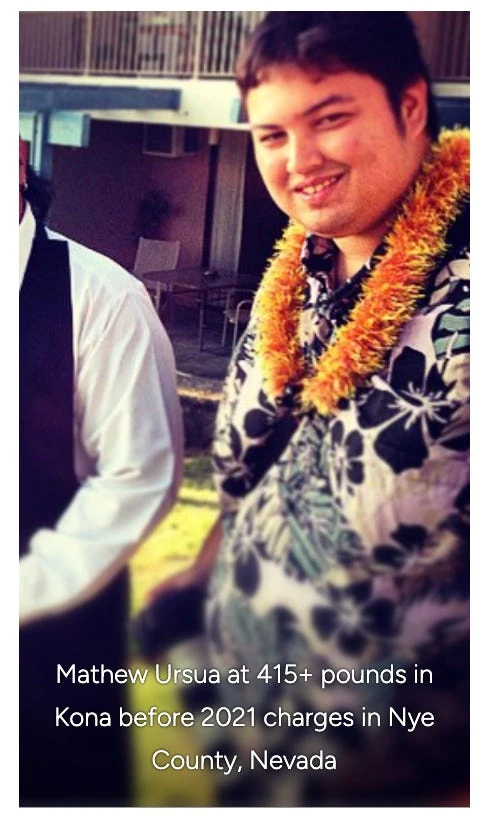
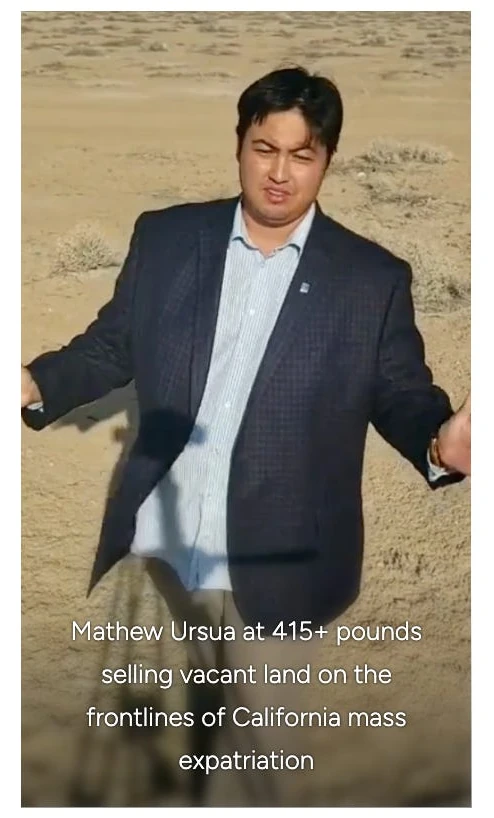
There was a time when I weighed more than 400 pounds. These photographs trace part of the extraordinary distance between that life and the one I have worked to build since. After losing more than 200 pounds, I began confronting another question: what would I do with the freedom to move, work, travel and imagine a different future?
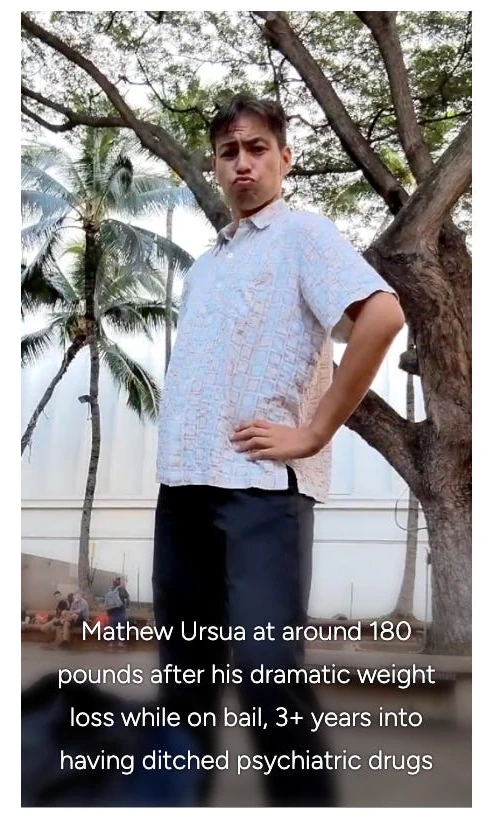
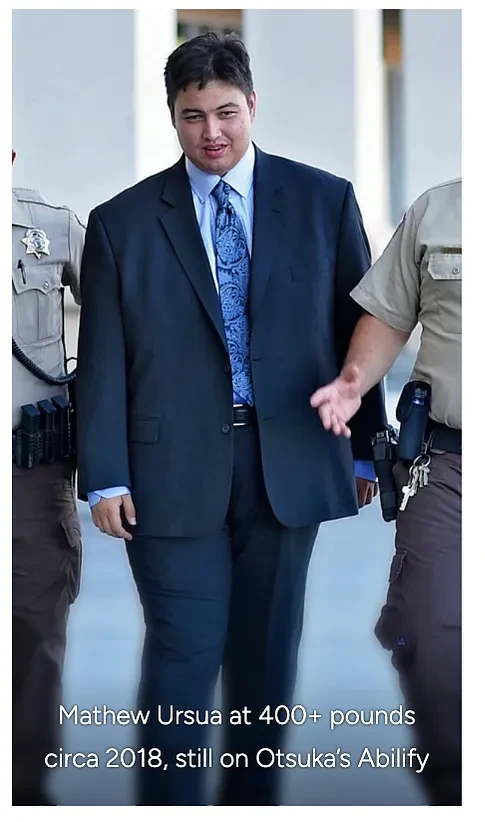
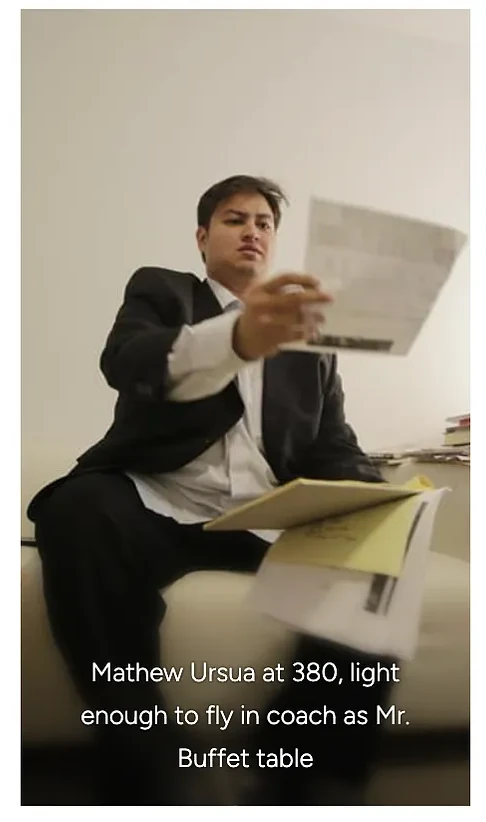
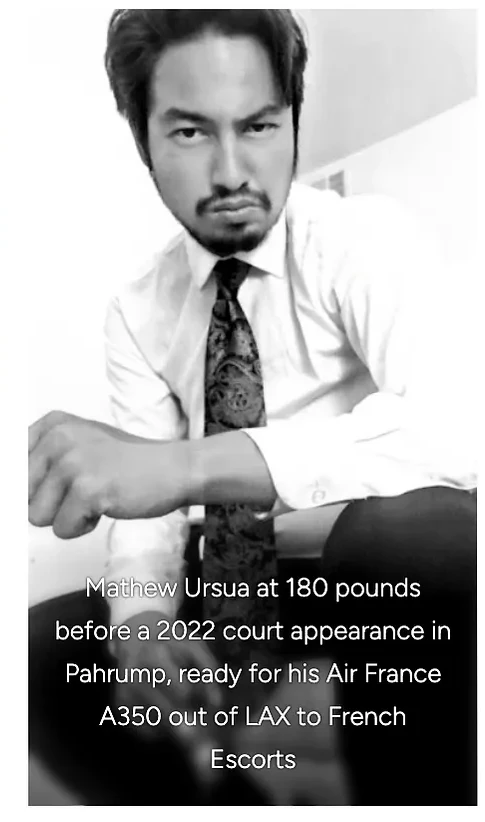
The transformation was never just a number on a scale. I had changed my body. The larger task was changing my life. I also remember with gratitude the men and women of the Honolulu Fire Department, whose work I photographed during my years covering emergency response in Hawaiʻi. Read my related essay ↗
Comeback of the Century · Personal essay
IV. What the Photographs Actually Show
Look at the photographs.
There I am in Kona, wearing a lei, weighing more than four hundred pounds.
There I am in Nevada, dressed for the business of real estate.
There I am surrounded by law-enforcement officers.
And there I am later, considerably thinner, wearing clothes that would once have been impossible for me to wear in the same way.
Those pictures belong to the same life.
They show a transformation, but they do not explain it.
The explanation lies in the years between them.
In the exercise, the walking, the food, the water, the homelessness, the legal proceedings, the psychiatric history, and the relentless ambition to become somebody with greater freedom over his own circumstances.
I have written about hypnotherapy and my decision to discontinue psychiatric medications. I have described the changes I believed I experienced afterward, along with the physical and psychological difficulties of readjustment.
Those are elements of my personal history that deserve serious examination, including comparison with the actual medical records.
But no photograph establishes what caused the weight loss, what happened to my neurotransmitters, or what any particular treatment did to my development.
The pictures establish something else.
I was there.
I was the man in the photograph.
And I am the man who has to live with everything that happened between the photographs.
Comeback of the Century · Personal essay
V. Why the Comeback Needs Capital
The transformation was not the end of the story.
It was the beginning of another problem.
What good is recovering your physical confidence if you remain economically dependent?
What good is learning to move through the world with greater freedom if you cannot afford the legal representation necessary to defend that freedom?
What good is finding that you want to date, travel, make friends, build a family, and participate in the lives of people who interest you if every day is consumed by securing food, water, transportation, and somewhere to sleep?
The body is only one part of a person's freedom.
Money matters.
Property matters.
The ability to generate income without surrendering every working hour matters.
That is why my work in real estate is not an unrelated professional interest appearing awkwardly in the middle of a memoir about photography and psychiatry.
It is part of the same argument.
Through **Take Title℠**, I want to assemble income-producing real estate and develop the financial resources necessary to sustain independent work, pursue legal remedies, publish books, and build a more secure life.
I welcome inquiries from people interested in contributing property or otherwise supporting that undertaking, with individual transactions subject to appropriate legal review and due diligence.
The point is not merely to become wealthier.
It is to become capable of acting without constantly calculating whether the next necessary decision will leave me without the money to eat.
And perhaps, finally, to have enough ordinary security to do some of the things I wanted to do when I was fourteen years old.
Meet people.
Travel.
Fall in love.
Build something.
Live.
I lost more than two hundred pounds.
Now I want the rest of my life.
Writing the Story—and Rewriting the Author
I am also the author of Comeback of the Century and am revisiting earlier manuscripts, including a tenth-anniversary edition of OIWAR.
The writing has become another means of examining the subjects that have occupied my photography: power, opportunity, class, institutions, personal freedom, and the extraordinary differences between the lives people imagine and the lives they are actually able to build.
I am particularly interested in returning to the intellectual and cultural world of Honolulu during the presidency of Barack Obama—a period shaped by student journalism, the University of Hawaiʻi, changing broadcast institutions, and the political repercussions of Edward Snowden's disclosures.
But ten years also changes an author's relationship to his own words.
A person can preserve what he wrote without accepting every interpretation he once placed upon his experiences.
He can recover the people and circumstances that made the work possible while recognizing how profoundly his understanding of them has changed.
That is part of what makes a tenth-anniversary edition worth undertaking.
Not merely correcting sentences, but reconsidering the consciousness that produced them.
My work now extends across Disaster Images℠, documentary photography, essays, books, public-records research and aggregation, real-estate reflections, and independent digital publishing.
I have no interest in pretending that these subjects exist in separate universes.
Government authority is connected to money. Money is connected to property. Property is connected to geography. Geography shapes opportunity. Opportunity changes the people we meet, the work we can perform, and the lives we can imagine.
Everything has a context. Almost everything has a record.
The challenge is learning to read it.
Documentary archive · Natural color
From the scene. Into the record.

Why I Continue
I believe independent journalism matters precisely because it does not require a person to belong to the institutions he wishes to examine.
I believe photography can preserve information that would otherwise disappear.
I believe public records belong to the public in a meaningful sense only when people can actually obtain, understand, and use them.
And I believe that the opportunity to question authority should not be determined by one's wealth, credentials, social connections, or access to a government press office.
There are photographs to publish, documents to examine, books to finish, and accounts of public events that deserve more than the official explanation.
I intend to keep doing it.
Mathew Ursua
Writer · Photographer
Disaster Images℠